Wednesday, 30 June 2021
Affirmation of the Week
Sunday, 6 December 2020
Learning New Things
Learning is one of my lifelong passions. As far as I can remember, I've always loved learning as a child, in school, not so much for the social interactions, but mostly for the knowledge I had access to (there was no Internet in my days!). It helped me understand the world around me and what was possible.
Learning is not only to understand the world around us, our history, our beliefs, where we come from, how things work, but also to understand yourself, and how you want to fit in in all that. It is very hard to make an informed decision when you are not aware of the context.
Learning expands your knowledge, possibilities and horizons. Throughout my life, I have retrained many times in order to be able to work in conditions and environments that would fit my lifestyles at different times of my life.
Learning new things can be scary because we do not know what to do, and we fear that not knowing will make us look and feel weak, inadequate, imperfect. This is very often the main cause of fear of trying new things for many people. When you are in your comfort zone, you know what to do and you know that you have a far greater chance of success, projecting greater value of yourself to others, as well as yourself, bringing confidence and a higher sense of self-esteem. Doesn't it feel good when you know you are good at something, that you can do something effortlessly? So why on earth would you get out of that beloved, easy and safe comfort zone? Why risk being exposed to the unknown, where anything can happen, none of it we are prepared for? What can happen? What will I lose if I fail? We, humans, are creatures of habits and moving towards the unknown just seems and feels so very unnatural. There are so many things we cannot control in our lives, why move away from the things we can actually control? There is just no sense in that.
But learning new things not only helps us increase our flexibility in life (like I have done in my work life to suit my circumstances), as the more we learn, the more we know, the more we know, the more we can do, and the more we can contribute and help others, as well as ourselves.
It also strengthens the health of our brain. Indeed as we learn new things, our brain creates new pathways, strengthening each time we practice the new activity. We get used to it after a while, the pathways are strong, and it becomes almost a habit, and that is when we challenge ourselves, learn more, go deeper, to create even more pathways. This keeps our brain active in a healthy way, alive, and it has been demonstrated in recent years by many scientific studies that learning new things on a regular basis can help prevent degenerative brain disorders such as Alzheimer's. How many elderly people do you know who have been active all throughout their life through work, and when retirement comes, spend their days aimlessly and wither away? Lack of challenge will lead to our brain becoming less and less active. Constant GROWTH throughout our life is essential for our health and survival, on many levels.
The new things you learn do not have to be big like climbing Mount Everest or learning medicine, it can be researching a topic you want to learn more about and take notes (any learning needs to be active, not passive, to be memorised efficiently. Taking notes is a great way to move away from passive learning to active learning), practising a new type of crafts, hobby or new technique, starting an exercise routine, a new diet, or even trying a new recipe or new foods. New experiences will create new points of reference for you as well, new memories.
The beauty of learning new things is that you are always in a beginner's mindset. Very often when we learn something, our learning experience is affected by what we think we already know on the subject, which prevents us to be totally open and receptive to the learning. Our mind and learning are clouded by the misconceptions and assumptions we have. The beginner's mind lets you be completely open to receive the information, enabling a better retention in your memory.
Listing all the new things I have learnt in my lifetime would be just too long and too boring for you to read, and for me to recollect. Here are some of the recent new things I have been learning:
- trying new mixes of fruits and vegs for my daily morning green smoothie once each week at least;
- reading a variety of new books (as opposed to re-reading faves, which I am quite guilty of);
- learning Japanese with my son (very early stage!);
- reviewing my progress on goals and life in general on a regular basis (weekly) and making adjustments;
- learning Sashiko (Japanese embroidery technique);
- doing walks in nature as often as I can and notice something different each time and take a photo if I can (I walk the same route each time as there is only one park where I live that I can manage with my asthma);
- learning aromatherapy, life coaching, and about energy healing;
- trying new art supplies on different media;
- practising bookbinding;
- watching new TV series (recently, I have started watching various Japanese animes with my son, which is very different to what I usually watch. It is also a great opportunity for quality time together);
- trying new musics to listen to (at the moment I'm into bird songs);
- trying new scents and combinations in my essential oils diffuser;
- trying a new cookies recipe and making adjustments/ experimenting with extra ingredients each time;
- starting the Jennibellie Lunar class to learn to work with lunar cycles and have fun with it (I have never learnt about this before, not even in school);
- trying new herbal teas;
- learning to sew different items, by hand and machine (pencil cases, pouches, my new projects are to sew cats beds for my furry babies, a pillow and pillow case with a sashiko piece attached to it, and a Haori - a Japanese "jacket" worn over a kimono - without using patterns, so I have to work out the patterns by myself, using my own measurements);
- learning remote access for work;
- updating systems at work for quality standards continuous improvement;
- having a mindful cup of tea at work to help me slow down and recharge (it only takes a few seconds);
- planning meals for my lunches as I now avoid carbs during the day (I used to have leftovers from the previous night to bring to work for my lunches, usually carbs, so this is brand new to me, preparing meals without carbs);
- trying new healthy practices like Tai Chi, energy healing and breathwork;
- started a daily journaling practice, as well as checking in and cheching out;
- trying new types of meditations, courses and visualisations on the Insight Timer app.
What new thing are you gonna try this week?
Have fun with it :-)
Sunday, 1 November 2020
Sunday Journaling Prompt
GOING DEEPER:
How do you really feel?
What is preventing you to feel completely whole and healed?
Do you feel any fear or resistance? Towards what?
What is this fear/resistance telling you?
What needs to heal?
What first small step can you take this week towards healing?
What will your life look and feel like once you have healed?
What will you be able to do that you couldn’t do before?
********************************************
Happy exploring, my dear journal adventurers ❤️
Stay safe x
Sunday, 18 October 2020
Sunday Journaling Prompt
GOING DEEPER -
Where in the past are you stuck? How does it feel to be there still?
What patterns do you feel keep repeating over and over again?
What are these patterns and experiences you are so attached to teaching you?
How would it feel like if you were free of your past?
Are you ready to move forward and leave the past behind? If not, what is keeping you there?
What do you need to do? Forgive yourself? Forgive others? Make sense of the experience you’re stuck with? Let go?
What is one small thing you can do TODAY to help you move forward?
It IS hard to work with our past, painful, disorienting, and sometimes discouraging. When you think you have found some resolution with an experience from your past, and a reminder comes up, and you feel like you’re back to it all over again. That’s what I’ll be working on this coming week with this prompt, and exploring the “going deeper” questions above.
Much love on your journaling journey with this prompt, and please remember that if anything comes up for you that could possibly be traumatic, first, it is normal, and also, always make sure that you have a support group or professional support to help you through this xxx
Wednesday, 16 September 2020
Saturday, 12 September 2020
Wisdom Cards
For this article, I've made a couple of videos for you to show you my wisdom cards and my process for making them.
Wisdom cards (or inspiration/guidance/help/truth cards, whatever name you want to call them) are a little bit like the index cards you use for making your revision for exams and tests at school. In many ways, it works the same. The wisdom cards remind you of what is important in the "exam" of our daily life. We are often put to the test, confronting challenges and blocks, and these cards are here to help you know (or refresh your memory, because your inner wisdom already knows, after all, you've made the cards) what to do.
They are one of your many tools in your survival kit, but such an important tool. They are what I call your maps to your true north.
In the first video, I go through my cards and explain a bit more where they come from and what they are to me, what themes I like to focus on. You can watch the first video by clicking on the image below (you will be directed to Youtube. The video is on my artsy channel, Christelle's Art Factory)
- Melody Ross, The Walk and Soul Book classes (currently unavailable)
- Christelle's Art Factory Youtube channel HERE
- my Soul Book videos playlist on Youtube HERE
- book Writing Down Your Soul by Janet Conner
- Insight Timer app teacher Giovanni Dienstmann
- small bottle of white gesso Ranger Dina Wakley 1 fl oz/ 29 ml available on Amazon
- Docraft Artiste multi purpose paints / Americana craft paints - both available on Amazon
- Sharpie markers
Your Wisdom Cards are gift you give yourself to never forget what is important to you and that you always have all the tools you need to face challenges and find your happy in this life.
I hope this process inspires you to make and use your own.
Enjoy xxx
Wednesday, 5 August 2020
Thursday, 16 July 2020
Wednesday, 8 July 2020
Sunday, 21 June 2020
Self Care
- How do we do self care?
- Why don’t I do it?
- What works best for me for self care?
- What does tired feel like?
- What does overwhelm feel like?
- What could rested and renewed feel like?
- What could peace feel like?
- What do I expect of myself that I shouldn’t expect?
- What do I currently have in place for my self care?
- What routines in my life are supporting my self care?
- What routines in my life are detrimental to my self care?
- How can I change my detrimental routines? If they cannot be changed (eg. work, family, financial commitments), how can I deal with them in a way that will reduce the damage to my self care? What do I need to achieve this? Who can help me?
- What do I need more of in my self care?
- How do I want to feel every single day of my life?
Thursday, 11 June 2020
Inspirational Quote Thursday
I have decided to now include the Facebook inspirational quotes on Mondays and Thursdays on the blog. Keep everything together.
So here it is-
Have an amazing day, and stay safe, wherever you are x
Sunday, 7 June 2020
Saturday, 6 June 2020
Insight Timer App Review
As you may know from a previous article, meditation is an integral part of my daily life and the Insight Timer app, I have found, has been supporting my needs very well.
While my meditation practice has a specific structure, I find that I rarely use the app for actual meditations instead of my established Ziva practice, but more for the vast array of relaxing music available on this app. Seriously, it is a gold mine! I will play longer pieces for my evening wind down or even during the day when I feel anxious, stressed or overwhelmed. I also like to listen to calm music when I read as, I have come to realise, it helps me relax while I'm reading and helps me focus more. The "Evening Fire" instrumental song by Loula Taylor is my favourite go-to background music for my Ziva meditation; it is exactly 20 minutes, just like my meditation session, which makes it perfect for me to gently time my session. The music is also not distracting which is very important.
But let's have a look at this wondrous app that is now a full part of my well-being kit.
The app is available both on Google Play and Apple App Store. It is free to download and use, but a subscription is also available (monthly, yearly) to be able to access content offline and have availability of courses (they are not accessible if you are on a free account). You can start with a free trial period before you decide to subscribe, if you want access to every option available on the app. I did the trial, cancelled it before the end of the trial period and then received a half price offer on the annual subscription (at that time, annual was the only option offered for Premium). This is how I am currently on a Premium account. It will expire in August this year and, unless I get another good offer like this one, there is a fair chance that I will stay on the free account, just because there is still so much you can access.
The free account gives you access to all the meditations and music so, in my books, that's fantastic to start with. There are thousands of teachers, musicians and meditations available. You can search by type, length, teacher, style, keywords, which makes the search very efficient in quickly finding what you're looking for.
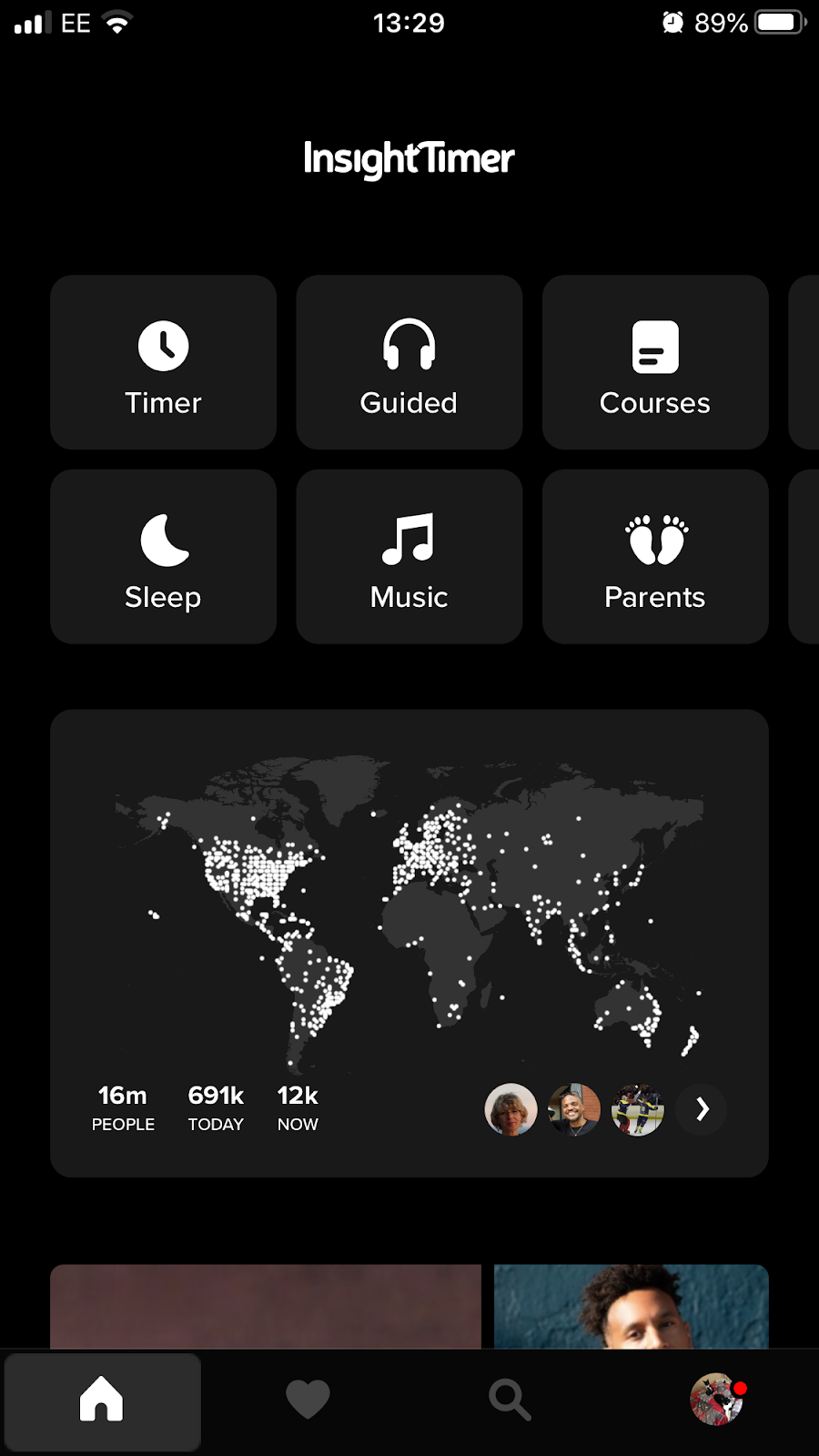
Here are a few screenshots of my Insight Timer to give you an idea of how it's organised:
As you can see, there is a Parents category with music, talks and meditations for children and teenagers. A really invaluable resource, especially in these uncertain times.
As I said, the search lets you search in different ways. Here are the default search options on the Search page:
Here are some of my personal favourites and recently played (there are MANY more but that would take an awful lot of photos for you to look at!):
Some of my faves teachers I follow, so far (there are thousands I haven't discovered yet!) -
Here is the Courses page (only available with Premium accounts):
And here is a look at the Account page and options:
As you can see, this app is very comprehensive and the materials availability quite diverse.
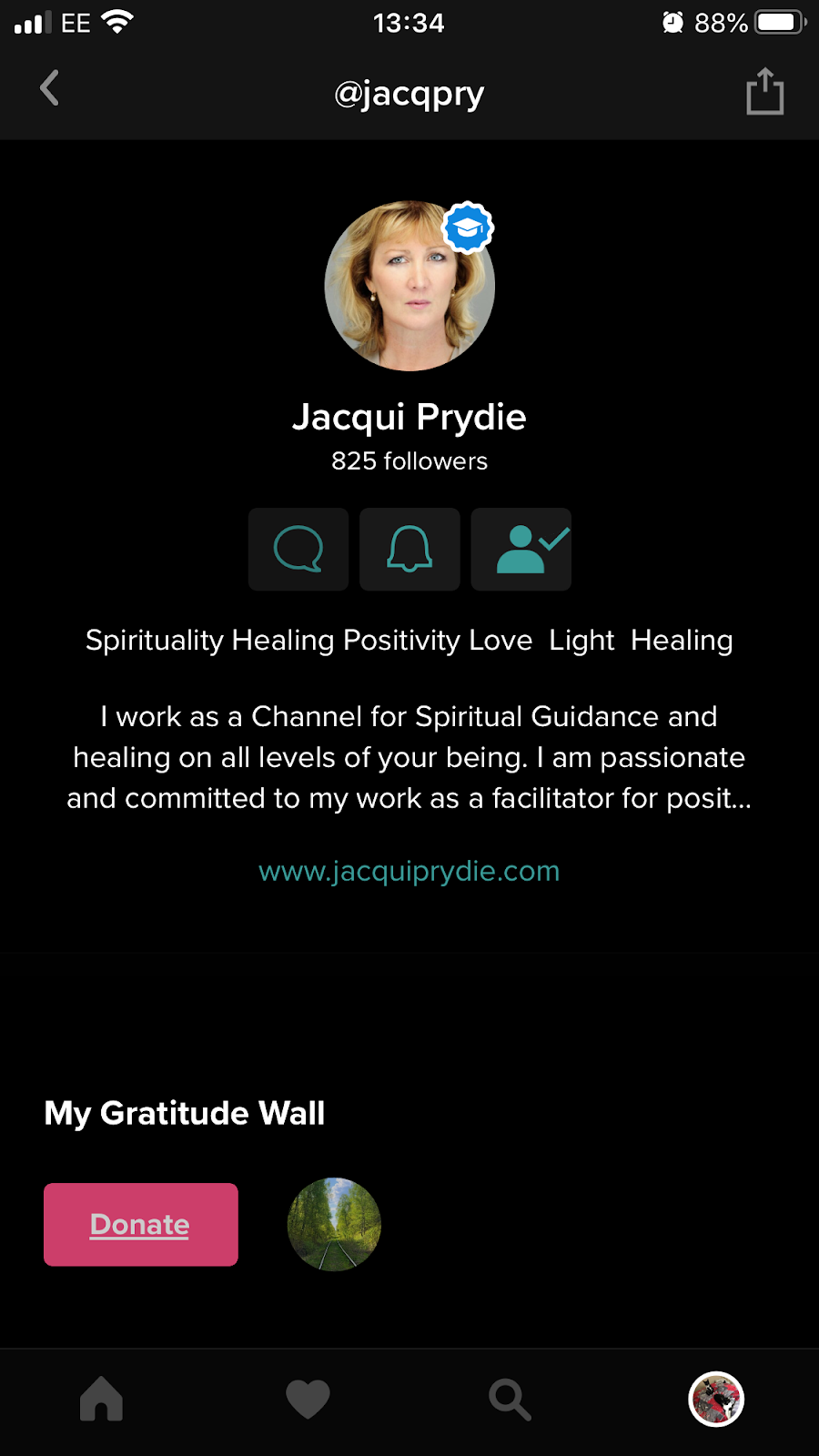
Since I have discovered Jacqui Prydie a few months ago, I have delved into the world of Affirmations and have been listening to one of her Affirmations meditations every night when I go to bed. You can see a few titles on my Recently Played screens.
What I love the most about Insight Timer, apart from the fact that you have gigantic access even with the free account, which is definitely not the case for other meditation apps, is the variety of styles that you get. Often, meditation apps focus on a particular style of meditation, exploring different aspects and with different courses, like the Headspace app, for instance, which was the first meditation app I actually used.
But Insight Timer enables you to discover and explore a multitude of meditation aspects, from sound therapy, to mindfulness, gratitude, affirmations, reprogramming, manifestation and mantras, to name but a few. There are also some very good talks about a variety of wellness and social subjects. I particularly enjoyed Justin Michael Williams "Forgiving Yourself", which is a big thing for me I need to work on, and "The Revolution Starts Inside" which I found very inspiring and beautiful.
I invite you to give this app a try, even if it's just staying on the free account.
You have truly nothing to lose and everything to gain.
Saturday, 30 May 2020
Affirmations
When affirming something, you are emphatically stating that it is so.
It is with this attitude in mind that affirmations are built and stated.
Affirmations are a practice that was firmly established in the early 20th century by French psychologist and pharmacist Emile Coue, even though the method can be traced back as early as ancient eastern religions.
The great advances in medical research now enable to demonstrate and support the effectiveness of practising affirmations, especially in modern neuroscience.
The aim of affirmations is to establish positive thinking and empowerment in the individual. They are presented as statements in the present tense. Using this tense enables you to ground in the now.
Another particularity of affirmations is that they contain either (or several) of these words - I, me, my.
The effect of this is to help the “affirmer” to focus on him/her to empower him/herself and move into a state of positivity and confidence.
Examples of affirmations are: “I am worthy of love”, “the universe has my back”, “others looks up to me instinctively for wisdom and support”...
The empowerment target theme can be very varied, depending on your initial intent - self-esteem, confidence, relationships, success, overcoming fears and obstacles, health...
When you start practising affirmations, they can sound a bit cheesy to you, but you just need to trust the process. In time, you will feel the transformation and find that the initial discomfort and embarrassment were well worth it.
While the main practice model consists of stating the affirmation (either outloud or to yourself) and repeating it, listening to affirmations can also be effective. They still access your subconscious who will integrate them in your mind.
The more you state the affirmation, the more you get used to it and believe it and, as you believe it, it becomes part of your thinking patterns.
I have been listening to various affirmations meditations from Jacqui Prydie on the Insight Timer app, on a daily basis just before bedtime, and have found them not only very relaxing but also beneficial, especially in these uncertain times.
I have decided to be more active in my Affirmations practice and concentrate on one affirmation to focus on per week. So, from Wednesday 3rd June, I will be posting one affirmation per week on the blog, Facebook and Instagram for you to join the adventure.
Keep an eye out for Affirmation Wednesdays...
Saturday, 16 May 2020
My Life On Lockdown - So Far
Saturday, 2 May 2020
Routines
Synonyms - procedure, practice, pattern, regime...
Routine is based on the systematic repetition, day after day, of specified tasks. By having a set routine, you have created a set of habits that are inherent to your life.
In general language, we tend to use the word "routine" with some detachment, ie. "it's OK, it's just a routine check" or in a pejorative way, where routine means boredom, doing the same thing, over and over again - caught in the loop of Groundhog Day.
While all these meanings of the word are very valid, the rapid growth of self-care as a practice and an essential part of your well-being and productivity has encouraged us to view the word routine in a more positive light.
Indeed, by creating a routine, you are creating a set of positive habits that will enhance your life, your efficiency, your happiness and, most likely, that of others around you.
Creating a routine is also a great way to get rid of habits that are detrimental to these aspects of your life. You are replacing negative with positive.
Having routines in your life has scientifically been proven by many medical research projects to be beneficial to your overall health. They create stability to your life, preventing stress and overwhelm in certain aspects of your life, as well as a sense of safety; changing or creating habits and routines give you a sense of control. You can actually have influence over things you can truly control, which gives a feeling of achievement, satisfaction and order.
I'm sure we've all been there - waking up late in the morning for work, rushing through the shower, skipping breakfast... Pretty obvious you will get stressed as I'm pretty sure very few of us have a routine they feel secure and confident to follow like a breeze when you pressed the Snooze button too many times.
By creating stress this way, a state of panic, the fight or flight reaction kicks in immediately in your whole body, creating a weakening of your physical and mental abilities, as well as depleting your immune system. When you don't have a routine, you just juggle with everything you have to do and try to wing it. I can't really think of many other things more stressful than this.
The typical routines are morning routine and evening routine, but you can create a routine for pretty much anything - the way you prepare your food, the way you start and finish work, at lunchtime, in your creative process (whether you are a professional or hobbyist), when walking the dog - and you can even have routines for specific periods of the year, like Christmas (in this type of cases, you might also call them traditions), during school holidays when you have the kids home with you all day...
I have a few sets of routines - which, I guess, I could call sub-routines - that are part of other routines. I know, it sounds complicated but it really isn't. I'll give you an example.
I have a skincare routine and a hygiene routine that are both part of my morning and evening routines, with slight alterations whether I'm doing these in the morning or in the evening. For my skincare routine, in the morning, I start with washing my face, and if it's in the evening, I will wash it twice as I'll need one round to remove my make-up and another to actually wash my face. Similarly for my skincare products, I have a selection that I use both morning and evening - I keep these in the middle of my shelf, in the order I will apply them - while my morning products are kept on the far right side of my shelf and my evening products are kept on the far left of my shelf. It might sound a bit OCD (which I don't believe that I am), but organising in an easy and visual way is the best way to keep a habit or a routine, especially when you're introducing it - it's so easy to give up when things are too complicated. You need to be able to do it almost with your eyes closed.
In the evening, I have a very specific routine to help me wind down and sleep well. I have sleep issues, mostly waking up in the night and not being able to go back to sleep until - very often - half an hour before I'm due to get up. For a long time, I felt extremely depleted and lethargic because of this, as I wasn't getting a restful sleep to bring me enough energy to last all day with a smile and a dance. Again, creating that routine was a struggle - depending also on what I need to do, I don't follow it 100% of the time, but for the most part I do manage to stick to it quite regularly. A few months ago, I came across a blog article/newsletter email from The Betty Rocker (love her, she's AWESOME) where she was explaining the importance of setting an efficient evening routine in order to maximise the quality of your sleep. She showed a screen shot of her mobile phone, where she set up alarms for each activity. I have to say, since I have done this, I haven't really had too much hassle following my routine. I sincerely think that it is the main reason why I have managed to have it ingrained in me. When I skip a step, I really feel it.
Here is a screen shot of the alarms I have set up for my evening routine (and I will explain them in more details below):
Step 1: I'm not eating anything after 7:30pm. This is to ensure that I have finished (or almost finished) digesting by the time I am ready to go to sleep. When you are digesting, your body uses energy, which interrupts sleep quality and the restorative part of sleep. Sometimes, you might get a bad night's sleep only because you had heavy and/or rich foods before going to bed.
Step 2: I'm not drinking anything after 8:30pm to avoid night trips to the toilet - we've all been there, I know! This is also where I have scheduled to do my hygiene and skincare routine, but to be honest, very often, I tend to do it between these 2 steps. It gives me more time for journaling. I have 3 journals on the go - a 1-day-a-page diary, which helps me record briefly what happened in the day, a "proper journal" where I go a lot deeper - I usually write 3/4 pages on average per day - and do a daily doodle, and an affirmations journal, where I chose an affirmation and repeat it throughout the page (it gets into my system when I'm ready to sleep, conditioning you for the next day - more on this soon in an upcoming article on sleep).
Step 3: I read a proper book (not Kindle or other digital) for half an hour. This helps my brain to slow down and my body to wind down. It also makes me happy as I love reading and, especially if I've been at work all day, for me it is my precious me-time. From this moment, I also stop using any screens (mobile, ipad, laptop, TV...) to stop being exposed to blue lights, which are also a great culprit for sleep disruption. So please don't take offence if I don't text or message you back!
I have also recently taken on listening to an audiobook instead of reading. I tend to do this on days I am extremely tired or if I have a headache. It enables me to still have my bedtime story-time while resting my eyes (and arms).
Step 4: meditation for me, especially in the evening, is non-negotiable. It is what de-stresses my brain and my body and keeps me more or less sane. I am a big Ziva meditation fan, but having tried other types of meditative exercises from various methods, I am now mixing it all up, while still following the Ziva sequence. It does take me 25/30 minutes of total quiet both inside and outside. I often play relaxing music on low volume from the Insight Timer app (my favourite) as it enables me to roughly and gently time the end of my meditation, to come out of it slowly. By this time, I'm totally ready for the next step!
Step 5: Lights off, sleep tight!! ZZZ...
This routine might seem very regimented, but it actually flows very nicely to calm you down both physically and mentally throughout the evening.
Having routines does not mean however that you should only do the same thing over and over again. It is also important, as a healthy habit, to try new things (foods, styles of books/movies/TV series/games, hobbies, walking routes, new type of exercise...) to keep your brain alert. Your brain needs variety and new challenges all the time to keep growing and evolving, and new activities are equally important. It also has the merit to fight boredom for those of you who get bored easily. My most recent new thing to try is to learn and use Trello for organising and scheduling my blog/Facebook and Instagram tasks. Another great example of this can be learning a new word and definition a day/week, or learning a new language.
Whatever your interests are, with the wide accessibility to knowledge that we are now so blessed to experience, there will always be something new for you to try.
On a last note, all routines are not created equal and if a particular routine does not work for you, never hesitate to review it and change it - try new things ;-)
And if you are new to creating a routine, start small to make it easy and enjoyable, and keep adding as you go along. Only this way will you be able to maintain it. It might seem like a big undertaking but it is in your health's and well-being's best interest so it is totally worth the initial effort - YOU CAN DO THIS :-)
Saturday, 25 April 2020
THE POWER OF ACHIEVING
Sunday, 27 October 2019
Sunday Journaling Prompt #8
After a laptop-free home break, I am back to the blog this Sunday for our next journaling prompt:
This question is often easy to answer for people around you, but not so easy for you.
Take a good honest look inside yourself and at your experiences and achievements in life (big and small), and you will find your answers.
YOU MATTER and you are UNIQUE.
Until next week...
Sunday, 29 September 2019
Sunday Journaling Prompt #5
Today I am asking you to dig deep and be extremely honest with yourself, without any shame or any fear. It is important for you in order to progress to a place in your life where you will find your happiness.
I know, this is scary shit, but we’ll worth doing. It doesn’t mean that you’ll need to drop everything in your life, but it will give you a clearer idea of what you actually need and devise a plan of action to get it.
It was this question that led me on this journey - one baby step at a time...
Wednesday, 11 September 2019
STRESS - What Is It Good For? Absolutely Nothing?
Stress is such a nasty word nowadays.